
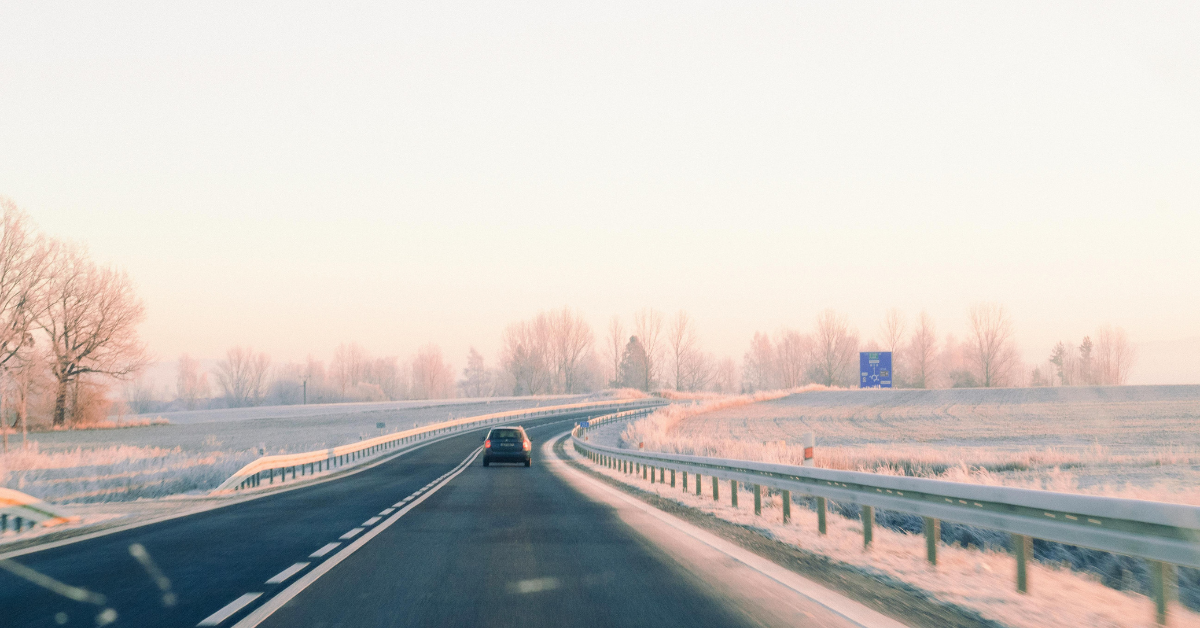
I always had terrible PCS timing. I moved to Georgia in the middle of the summer, and then to North Dakota in the middle of winter. Needless to say, the moving company who took us to Grand Forks in January was not impressed with the weather they had to unload in.
Winter PCS moves don’t get talked about much because most military families are focused on summer — the orders, the school calendar, the peak season scramble. But a meaningful number of families move in November, December, January, and February every year.
Here’s what most winter PCS guides miss: there are genuine advantages to moving off-season. The logistics are harder in some ways, but significantly easier in others. If you’re facing a winter move, this guide covers both sides honestly — including what it actually takes to drive cross-country in cold weather safely.
The Real Advantages of a Winter PCS Move
Nobody chooses a winter PCS for the weather (unless you’re moving to the beach). However you ended up with a winter move, these are real benefits worth knowing.
Better household goods availability
Moving companies contracted by the government are significantly less slammed in winter than they are in June and July. Preferred pack and pick-up dates that would be impossible to get in summer are often available with short notice in January. You have more control over your timeline, and movers who aren’t racing between five jobs in a day tend to be more careful.
On-base housing availability
On-base housing wait lists that stretch months during peak PCS season are often dramatically shorter in winter. Families who summer-PCS’d have settled in. The competition for units that match your family size and preferences can be lower. If on-base housing is your goal, a winter move may actually get you there faster than waiting for summer would have.
Less competition for TLE and hotels
TLE-eligible properties near installations and pet-friendly hotels along major corridors have much more availability in winter. You’re not competing with hundreds of other families for the same rooms. Rates at some properties are also lower in off-peak months, which means your lodging per diem goes further.
Finance office processing times
Finance offices process travel vouchers faster in winter when they’re not drowning in the summer PCS volume. A voucher you file in January may come back significantly faster than the same voucher filed in July. If PCS pay delays have ever been a problem for you, a winter move timeline works in your favor.
Off-base housing and rental market
Landlords near military installations who know the PCS cycle often have more vacancies in winter and more negotiating flexibility. Lease start dates, move-in timelines, and terms that would be non-negotiable in summer may be more flexible when you’re one of a handful of families looking rather than one of fifty.
The Real Challenges of a Winter PCS Move
The drive
This is the big one. A cross-country winter drive is not the same animal as a summer drive. Weather can turn a 3-day authorized travel window into a 4 or 5-day reality. Mountain passes close. Black ice doesn’t announce itself. And if you’re driving from somewhere that doesn’t get winter to somewhere that does — say, Georgia to North Dakota — the weather transition mid-drive can be genuinely shocking if you’re not prepared for it.
More on the driving specifics below.
Kids and mid-year school enrollment
This is the hardest part of a winter PCS for most families with school-age kids. Pulling a child out of school mid-year is harder socially and academically than a summer transition. There’s no clean break — they leave in the middle of friendships, projects, sports seasons, and academic units.
It’s manageable, but it requires more active support than a summer move. More on this below.
Holiday timing
December and early January moves often overlap with the holidays, which adds logistical and emotional complexity. Moving companies take time off. Finance offices run reduced hours. Family obligations compete with move logistics. If your RNLTD falls in late December, plan for reduced availability across the board and build extra buffer into your timeline.
Household goods delivery in winter
While movers have better availability in winter, delivery to certain locations can be complicated by weather. A move from the South to the Northern Plains or the Pacific Northwest in January means your movers are also dealing with winter conditions.
Get confirmation of delivery dates in writing and have a plan for what happens if delivery is delayed by weather — and your go-bag needs to cover a longer window than you might plan for in summer.
Mid-Year School Enrollment: What Military Families Need to Know
The Interstate Compact on Educational Opportunity for Military Children (MIC3) provides specific protections for military kids transferring between states mid-year. These are worth knowing before you arrive at the new school:
- Enrollment deadlines: Schools cannot deny enrollment to a military child based on missing records that are in transit. Your child can enroll while records are being transferred.
- Course placement: Schools must initially honor the course placement from the sending school, including honors and AP courses, while determining appropriate placement at the new school.
- Extracurricular eligibility: Military kids are eligible for extracurricular activities immediately upon enrollment — no waiting period for sports or other activities.
- Graduation requirements: If a mid-year move would prevent a student from meeting graduation requirements due to course differences between states, the new school must work with the student on an alternative pathway.
Contact the School Liaison Officer at your gaining installation before you arrive. They know the local district, have relationships with school administrators, and can smooth the enrollment process significantly. This is especially valuable for mid-year moves when school staff may be less prepared for a new military family than they would be at the start of the year.
For the emotional side of helping kids adjust to a mid-year school change, see our full guide on helping kids adjust to a PCS move.
How to Drive Cross-Country in Winter: What Actually Matters
A winter PCS drive requires more preparation than a summer one. The stakes for being underprepared are higher, and the margin for error is smaller. Here’s what to focus on.
Before you leave: the car
- Tires: All-season tires are the baseline. If your route takes you through mountain passes or areas with significant snowfall, winter tires are worth considering. Chains are required on certain mountain passes in certain states — check your specific route for requirements before you leave.
- Battery: Cold weather is hard on car batteries. If your battery is more than three years old, get it tested before a winter long drive. A dead battery in January in Wyoming is a different situation than a dead battery in July in Florida.
- Fluids: Check your antifreeze level, get windshield washer fluid rated for freezing temperatures, and oil appropriate for cold weather.
- Wipers: Winter wiper blades make a real difference in snow and sleet.
- Four-wheel drive or AWD: Know what your vehicle has and how to use it.
The winter car kit: what to have in the car
- Ice scraper and snow brush — a full-size one, not the tiny one that came with the car
- Jumper cables or a jump starter pack
- Blankets: one per person, preferably wool or synthetic, not cotton
- Sand or kitty litter for traction if you get stuck
- A small shovel
- Extra warm layers, gloves, and hats for everyone in the car
- Hand warmers
- A flashlight with fresh batteries
- Snacks and water for an extended roadside stop
- A physical map or printed directions as backup — GPS can be unreliable in remote winter areas
- Portable phone charger
Black ice: the hazard that catches people off guard
Black ice is a thin, nearly invisible layer of ice that forms on road surfaces when temperatures are at or below freezing and moisture is present. It looks like wet pavement and has essentially no traction. And it forms most commonly on bridges, overpasses, shaded sections of road, and any elevated surface where cold air hits from both above and below.
How to manage it:
- If the temperature is at or near freezing, drive as if black ice is present whether you can see it or not
- Slow down on bridges and overpasses even when the main road seems clear
- Increase following distance significantly — stopping distance on ice is dramatically longer than on dry pavement
- If you hit black ice, don’t brake suddenly. Ease off the accelerator, hold the wheel steady, and let the car slow gradually
- Morning is the highest-risk time, especially after a clear cold night when dew or light moisture has frozen overnight
Mountain pass driving in winter
If your route crosses mountain passes — for example, I-80 through Wyoming, I-90 through Montana, I-70 through Colorado, or I-84 through Oregon — winter conditions can close them entirely or require chains. A few things to do before you leave:
- Check the state DOT websites for your route for current road conditions and chain requirements. Most states have apps or text services you can subscribe to for real-time updates.
- Have a plan B route that avoids the most exposed passes if conditions are severe
- Know the chain laws for the states you’re crossing — some require chains in certain conditions regardless of what tires you have
- Don’t try to push through a closing pass. The time you lose waiting is nothing compared to the time you lose in an accident or getting stuck
Driving in snow: the basics
If you’re coming from a state where it doesn’t snow much, driving in actual snow is a skill that takes time to develop. The main principles:
- Slow down significantly. Speed limits are set for normal conditions.
- Accelerate and brake gently. Abrupt inputs can cause skids.
- Increase following distance dramatically. Three seconds is the minimum dry-road guideline. In snow, double or triple it.
- Visibility drops fast in heavy snow. If you can’t see, pull over safely and wait. It’s not worth crashing.
- Know how to steer into a skid — if the rear of the car slides right, steer right to recover. This can be counter-intuitive until you’ve practiced it.
Build a buffer into your authorized travel days
Your authorized travel days are calculated at 350 miles per day per JTR chapter 5. In summer that’s a reasonable daily target. In winter it may not be, depending on your route and weather conditions.
If your route takes you through areas with real winter weather risk, build the conversation with your gaining command into your planning — most commands understand that a drive from Texas to Wyoming doesn’t go the same in January as it does in June.
Get any timeline flexibility you might need in writing before you leave, and make sure you have contact information for someone at your new base in case you’re delayed.
Know your authorized days and per diem before you leave so you can plan your stops around the weather or mountain passes.
Our free PCS road trip planner calculates your authorized travel days, per diem, and mileage reimbursement and maps your route with overnight stops. Use it before you leave, and on the road if you need to change your route.
Frequently Asked Questions
Winter PCS moves have real logistical advantages over summer moves: better household goods availability and mover care, shorter on-base housing wait lists, more TLE and hotel availability, faster finance office processing times, and more negotiating flexibility in the off-base rental market. The tradeoff is weather risk on the drive and mid-year school enrollment challenges for families with kids.
Contact the School Liaison Officer at your gaining installation before you arrive. The Interstate Compact on Educational Opportunity for Military Children (MIC3) protects military kids transferring mid-year — schools cannot deny enrollment pending records, must honor course placements from the sending school, and must allow immediate extracurricular eligibility. Know these protections before you walk into the new school.
A winter car kit should include a full-size ice scraper and snow brush, jumper cables or a jump starter pack, blankets for everyone in the car, sand or kitty litter for traction, a small shovel, extra warm layers and gloves, hand warmers, a flashlight, snacks and water for an extended roadside stop, and a portable phone charger.
This is in addition to your standard suitcase and emergency kit.
Black ice is a thin, nearly invisible layer of ice that forms on road surfaces at or below freezing temperatures. It looks like wet pavement and has almost no traction. It’s most common on bridges, overpasses, and shaded road sections. If you hit black ice, don’t brake suddenly — ease off the accelerator and hold the wheel steady. When temperatures are near freezing, drive as if black ice is present whether you can see it or not, and increase following distance significantly.
Not automatically. Authorized travel days are calculated the same way year-round per JTR chapter 5 — 400 miles or fewer gets one day, over 400 miles divides by 350. Weather delays are not automatically reimbursed as additional travel days.
If your route has real winter weather risk, have a conversation with your gaining command about timeline flexibility before you leave.
For a cross-country winter drive, winter tires are more practical than chains for most routes. Winter tires provide significantly better traction than all-season tires in cold temperatures and snow and don’t require stopping to install.
Chains provide better traction in severe conditions but must be installed and removed as conditions change, and are prohibited on some road surfaces. Check chain requirements for specific mountain passes on your route before you leave — some passes require chains regardless of what tires you have in certain conditions.


